
Riyadh, October 29, 2026, SPA -- Railways account for around 7% of global passenger transport and 6% of freight transport, yet generate only about 1% of the transport sector's emissions, according to the International Union of Railways (UIC). Such transport shares take into account the number of passengers, freight weight, and distances traveled. Rail’s efficiency is particularly significant given that the transport sector accounts for around a quarter of global energy-related carbon dioxide emissions, according to the United Nations.
In Saudi Arabia, rail transport is playing an increasingly important role in the shift toward a more sustainable transport system. Expanding passenger and freight services and strengthening connections between cities, ports, and logistics hubs help reduce fuel consumption and associated emissions.
Railways Support Saudi Arabia’s Shift to Sustainable Transport
The development of rail transport in Saudi Arabia aligns with the objectives of Saudi Vision 2030 and the National Transport and Logistics Strategy. Saudi Arabia Railways (SAR) operates a network spanning more than 5,500 kilometers of track, supporting passenger and freight transport and integration between different modes of transport, while creating opportunities to improve energy and resource efficiency.
From Roads to Rail: Measurable Emissions Reductions
In 2025, SAR’s operations helped avoid more than 364,800 tons of carbon dioxide emissions and save over 139.4 million liters of fuel. These figures reflect the fuel savings and emissions avoided by shifting transport from roads to railways. Freight and mineral transport are among the main contributors to these gains. SAR transported more than 30 million tons of freight during the year, and its freight operations eliminated the need for around two million vehicle trips on Saudi Arabia’s roads. Rail transport connects production sites with ports and industrial zones, reducing the need for long-distance trucking while helping ensure a steady flow of goods and raw materials.
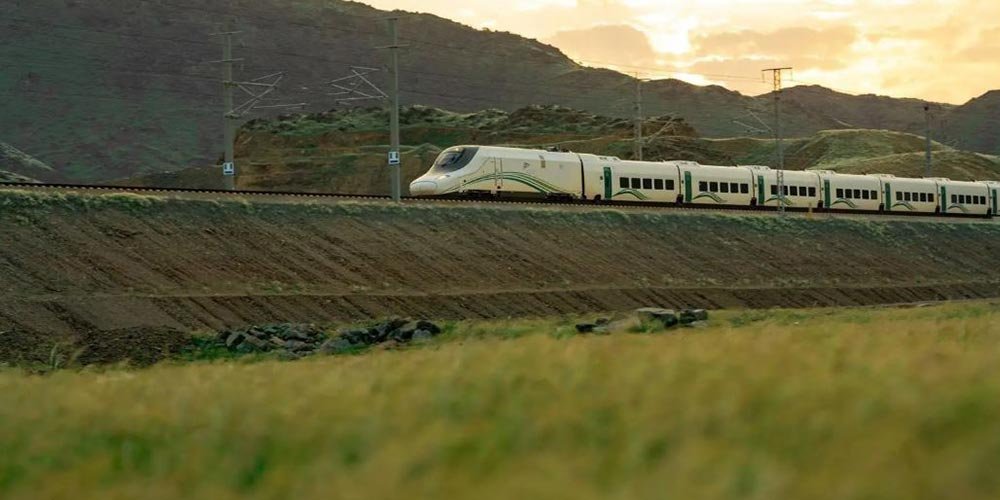
In passenger transport, SAR’s networks served more than 14.6 million passengers in 2025, offering shared travel options between cities and serving pilgrims. Both the Haramain High-Speed Railway and Al-Mashaaer Al-Mugaddassah Metro Line operate entirely on electricity, avoiding direct fuel combustion by trains. Their environmental benefits grow as emissions from generating the electricity they use decline.
Renewable Energy and Efficient Resource Management
Efforts to improve energy efficiency also extend to supporting infrastructure. More than 50% of SAR’s signaling and communications systems run on solar power. These systems are particularly important in remote locations, where solar energy and storage systems provide the electricity needed to maintain services while reducing reliance on conventional energy sources.
In materials management, SAR recycled 10,216 tons of waste from infrastructure projects and operational activities in 2025. The waste included recoverable industrial materials such as carbon steel and aluminum. The recovered materials were reintroduced into local industrial value chains, helping make better use of resources after their initial use and supporting circular economy practices.
Resource efficiency efforts include treating wastewater at Northern Line stations and facilities and fully reusing the treated water to irrigate green spaces, thereby reducing freshwater consumption. In parallel, the cumulative number of trees and shrubs planted across the company’s sites has exceeded 53,000, as part of efforts to increase vegetation at the network’s facilities. The management of these aspects is based on an environmental management system that complies with the ISO 14001:2015 standard. The system includes risk assessment, performance monitoring, and compliance with regulatory requirements, supporting the review of operational practices and improvements in the management of energy, water, and materials as the company’s business grows.
Safety is a pillar of operational sustainability, as the transportation system's sustainability is linked to operational safety and risk reduction. According to results announced by SAR on the development of its safety system over recent years, intersection accidents decreased by 75%, injuries by 62.5%, near-miss incidents by 63%, and collisions in yards and workshops by 68%.
In terms of safety culture and awareness, the company’s safety culture index reached 57%, exceeding the global average. Meanwhile, the “Aslam Lak” campaign reduced encroachments on railway property by 61.5% through field tours targeting the highest-risk sites based on operational data and risk indicators.
Sustainable operations require competencies to manage, maintain, and develop railway networks. In this regard, SAR’s localization rate reached 89% in 2025. The company also provided 104,668 training hours to 3,129 male and female employees, covering technical, operational, administrative, and leadership skills to strengthen national talent and keep pace with the sector’s expansion.
Economically, local content at SAR reached 67.35% in 2025, exceeding the target by more than 7%. This reflects the growing participation of national suppliers and manufacturers in the company’s business. The “ASASAT” program supports this trend by developing suppliers and encouraging investment in railway-related industries and services to meet operational, maintenance, and project needs, while expanding the sector’s economic impact across local supply chains.
As part of its 2035 strategy, SAR continues to expand passenger and freight transportation services and increase the operational capacity of its network, while developing operational technologies and improving energy and resource efficiency. These efforts will enable the company to accommodate growing transportation demand and provide broader options for travelers and businesses.