|
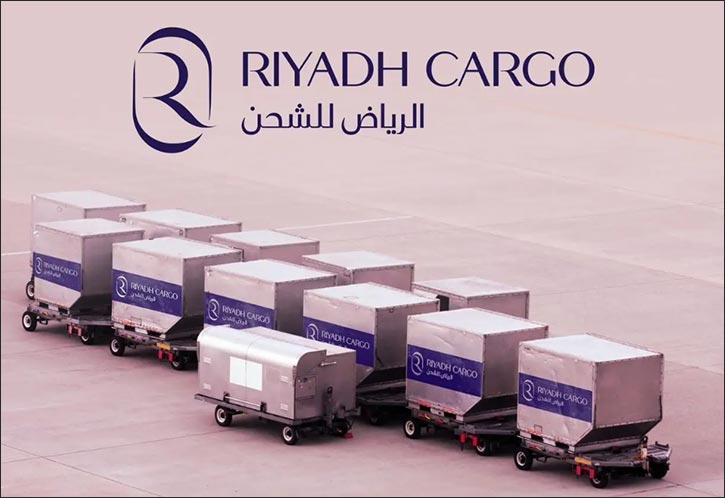
Riyadh, January 22, 2026, SPA -- Riyadh Air, Saudi Arabia’s new national carrier, officially entered the global air cargo market with the launch of its new service, “Riyadh Cargo,” activating freight operations through the belly-hold capacity of its aircraft fleet. The move enables the transport of goods efficiently and reliably across international markets, leveraging a fleet of more than 120 widebody aircraft currently on order, the airline said. The launch of Riyadh Cargo reflects a measured, phased approach to building a fully integrated, scalable cargo business operating from its main hub in the Saudi capital. The initiative aligns with Riyadh Air’s expansion of its destination network and operational rollout, which began with experimental flights under the airline’s “Pathway to Perfect” strategy, with services between King Khalid International Airport in Riyadh and Heathrow Airport in London. Riyadh Cargo has already demonstrated strong operational momentum on the Riyadh-London route, successfully transporting large volumes of diverse goods, including textiles, fresh flowers, fish, tea, and coffee. The performance underscores the service’s capability to handle time-sensitive shipments, perishable goods, and high-value cargo with a high level of reliability.
Commenting on the launch, Riyadh Air's global head of cargo, Pravin Singh, said the new unit was established with a clear focus on operational discipline, reliability, and long-term scalability. “Launching within a live environment allows us to test, learn, and continuously refine how we operate, while delivering real value to our customers from the get-go,” he said. Singh described the introduction of Riyadh Cargo as “a foundational step” in building a cargo ecosystem that grows in parallel with the airline’s expanding network and supports the Kingdom’s broader logistics ambitions. Digital capabilities remain a central pillar of Riyadh Air’s operating model. Riyadh Cargo has adopted advanced technology systems to centrally manage and control air waybills, enhancing operational data visibility. The approach is aimed at accelerating decision-making, improving operational efficiency, and maintaining high and consistent service levels as air activity grows and the network expands. As part of its digital strategy, Riyadh Cargo partnered with CHAMPS to deploy the “Cargospot neo” system for cargo management and terminal operations. The platform provides broader operational control, enhanced data visibility, and faster decision-making, supporting service reliability as shipment volumes increase and network complexity grows. The airline strengthened its operations through investments in unit load devices (ULDs), developed in partnership with Unilode. The ULDs are equipped with advanced tracking technologies to enable real-time shipment monitoring and highly accurate inventory management, ensuring resilient and sustainable cargo flows even amid irregular logistical challenges across its global network. On the ground, cargo handling services and freight terminals are operated in cooperation with SATS SA at the Kingdom’s three main airports: King Khalid International Airport in Riyadh, King Abdulaziz International Airport in Jeddah, and King Fahd International Airport in Dammam. These hubs are supported by modern facilities and dedicated handling zones, enabling real-time oversight and seamless logistical connectivity. Riyadh Cargo is positioned as a key enabler of growth, supporting Saudi Arabia’s ambition to become a leading global aviation and logistics hub. With a total fleet of 182 aircraft on order and Riyadh Air’s plans to serve more than 100 destinations by 2030, the airline is expected to contribute around US$20 billion to the Kingdom’s non-oil gross domestic product (GDP) and support more than 200,000 jobs globally.
| 
 RSS Feed