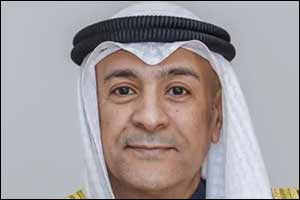
 Riyadh, April 21, 2026, SPA -- Secretary General of the Gulf Cooperation Council (GCC) Jasem Mohamed Albudaiwi affirmed that relations between the GCC countries and the Central Asian countries are based on solid foundations of shared history and mutual interests, expressing his confidence that this partnership will witness further growth and prosperity in the coming years, in a way that reflects the aspirations of its peoples for a more stable, prosperous and integrated future.
He made these remarks during his participation in the workshop 'Strengthening the Strategic Partnership between the GCC Countries and Central Asian Countries: From Historical Ties to Comprehensive Cooperation,' organized by the Gulf Research Center in cooperation with the Institute for Strategic and Regional Studies under the President of the Republic of Uzbekistan, yesterday in Riyadh.
The workshop was attended by Chairman of the Gulf Research Center Dr. Abdulaziz Sager, Director of the Institute for Strategic and Regional Studies under the President of the Republic of Uzbekistan Dr. Eldor Aripov and a number of ambassadors of Central Asian countries accredited to Riyadh.
At the outset of his remarks, the secretary general expressed his sincere thanks to Dr. Abdulaziz Sager for his initiative in organizing this workshop, which brought together the ambassadors of Central Asian countries accredited to Riyadh with a distinguished group of researchers, experts, and media representatives from both sides. 'The workshop provided an opportunity to exchange views and discuss ways to develop strategic relations and enhance cooperation between the GCC countries and Central Asian countries,' the secretary general said, while commending the researchers and experts from Central Asian countries for their keen interest in the workshop.
In his address, Albudaiwi stated that relations between the GCC and Central Asian countries are among the most promising regional relationships, witnessing increasing development in recent decades, highlighting that these relations are not a recent phenomenon, but rather are rooted in deep historical, cultural, and religious ties, in addition to shared economic and security interests. The secretary general said: 'Central Asian countries possess vast natural resources, particularly in the energy sector, including oil and natural gas, as well as rare minerals and agricultural resources. These resources make them important economic partners for the GCC countries, which seek to diversify their economic partnerships and enhance their foreign investments.'
He added, 'The GCC countries also possess significant expertise in energy management and infrastructure investment, which Central Asian countries need to develop their economic sectors. Furthermore, there are opportunities for cooperation in agriculture, as the GCC countries seek to capitalize on investment opportunities in this sector to secure their food needs. However, trade routes, which require transit through Iranian territory to reach the GCC countries, hinder the full realization of these opportunities, a significant obstacle, especially in the current circumstances.'
Albudaiwi also noted that the GCC countries and Central Asian states share many security challenges, such as combating terrorism, curbing extremism, and ensuring regional stability, stressing that these challenges open the door to enhanced security cooperation and information exchange between the two sides.
During his speech, the secretary general explained that economic integration between the GCC countries, Central Asian countries, and Azerbaijan constitutes a fundamental pillar in strengthening trade and investment relations and represents a pivotal factor in achieving sustainable development. 'The GCC's GDP reached $2.3 trillion in 2024, reflecting the strength and global competitiveness of the Gulf economies. Merchandise exports amounted to $823.1 billion, while merchandise imports reached $659.3 billion, placing the GCC countries ninth globally in total exports and 14th globally in total imports,” Albudaiwi said. He reaffirmed that these indicators underscore the importance of deepening economic cooperation and enhancing mutual investments between the GCC countries and their partners by removing trade barriers, developing digital infrastructure, and strengthening supply chain integration, thereby contributing to economic stability and shared prosperity.
Additionally, the secretary general underlined that the trade exchange between the GCC countries and Central Asian countries represents a promising opportunity that has yet to reach its true potential. 'Although the total merchandise trade between the two sides reached approximately $10 billion in 2023, this figure represents only 0.7% of the GCC's total global trade volume. GCC exports to Central Asia amounted to nearly $8 billion, compared to $1.6 billion in imports, revealing a wide margin of untapped potential between the two regions,” Albudaiwi said. Based on this reality, the secretary general called for elevating this exchange to higher levels by expanding investment partnership channels, enhancing economic integration, and building solid commercial bridges that contribute to the sustainable development of both regions.
Regarding the current situation in the Arabian Gulf, Albudaiwi pointed to the grave security challenges currently facing the GCC countries. 'Since February 28, 2026, the GCC states have been subjected to more than 6,000 missile and drone attacks in a single month. These attacks have targeted vital civilian facilities, including ports, airports, energy plants, and residential areas, resulting in loss of life and significant material damage,” the secretary general explained. He stated that the UN Security Council explicitly condemned these attacks under Resolution 2817, demanding an immediate halt. 'The GCC relies on the international community to ensure the full implementation of this resolution and prevent the recurrence of such aggressions,' Albudaiwi added, expressing his gratitude to the participants for their countries' support of the resolution.
Moreover, the secretary general stated that the repercussions of this crisis have extended to the security of navigation in the Strait of Hormuz, through which more than 20% of global energy supplies pass. He stressed that this situation casts a shadow over the economies of all nations, including the brotherly countries of Central Asia. Albudaiwi also reaffirmed the GCC countries' full commitment to their legitimate right to self-defense in accordance with Article 51 of the UN Charter, and to taking all necessary measures to protect their security, sovereignty, and the safety of their people and vital facilities, while remaining firmly committed to avoiding escalation and maintaining regional and international peace and security.
Concluding his remarks, the GCC secretary general said: “We rely on the support of our brothers and friends in upholding international legitimacy, safeguarding the principles of international law, and ensuring the stability of energy supplies for the benefit of all.'
|

 RSS Feed


