|
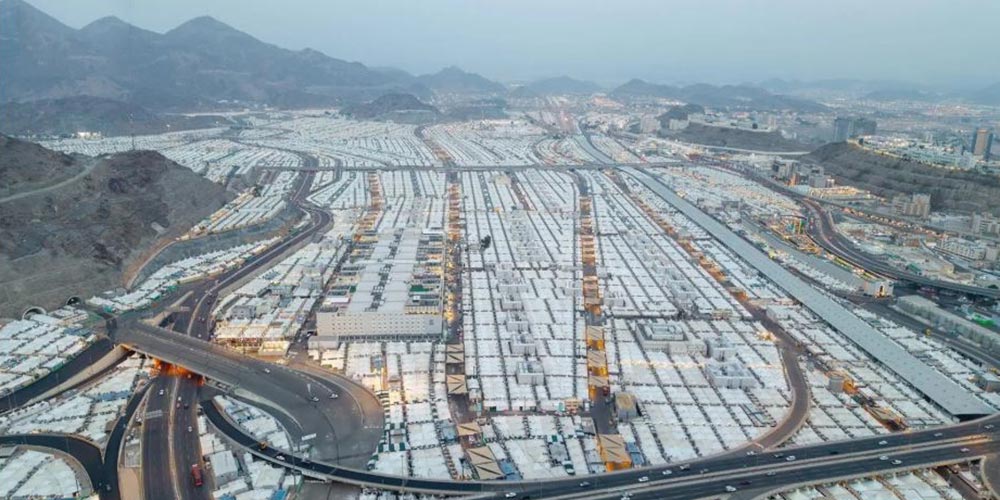
Makkah, May 22, 2026, SPA -- Kidana Development Company, in cooperation with the Ministry of Hajj and Umrah, has transformed previously underutilized areas within the holy sites into fully serviced accommodation zones, significantly expanding lodging capacity for pilgrims. The initiatives increased the capacity of developed sites to approximately 209,000 pilgrims over three consecutive Hajj seasons, while adding annual accommodation capacity for up to 70,000 pilgrims. The projects form part of ongoing efforts to enrich the pilgrim experience and enhance services within the holy sites. The development initiatives focused on maximizing the use of available space within the designated holy boundaries and improving accommodation efficiency to enhance comfort and service quality during Hajj. The works included preparing new areas and converting them into fully integrated environments capable of accommodating larger numbers of pilgrims in line with modern operational standards that improve accommodation quality and service efficiency within the holy sites. During the first phase, launched in the 1445 AH Hajj season, development works in Arafat covered 85,000 square meters and accommodated up to 35,000 pilgrims. In addition, the Kidana Al-Wadi project in Mina covered 30,000 square meters with a capacity of 20,000 pilgrims, bringing the total accommodation capacity to 55,000 pilgrims. In the second phase, implemented during the 1446 AH Hajj season, development works at several sites in Arafat covered 27,000 square meters and accommodated up to 10,000 pilgrims. This was in addition to the Rabwa Kidana project in Mina, which was trial-operated across 33,000 square meters and served around 2,000 pilgrims, increasing the total capacity to 67,000 pilgrims. The third phase, carried out during the 1447 AH Hajj season, included the Kidana Al-Khayf project in Mina, covering 24,000 square meters with a capacity of 3,500 pilgrims, as well as the Rabwa Kidana project spanning 33,000 square meters with an expanded capacity of 16,500 pilgrims, raising the total number of beneficiaries to 87,000 pilgrims. The projects also contributed to improving accommodation standards, with the space allocated per pilgrim increasing from 1.2 square meters to 4.5 square meters — an increase of nearly 300% — under enhanced operational standards aimed at improving comfort and living conditions within the holy sites.
|

 RSS Feed